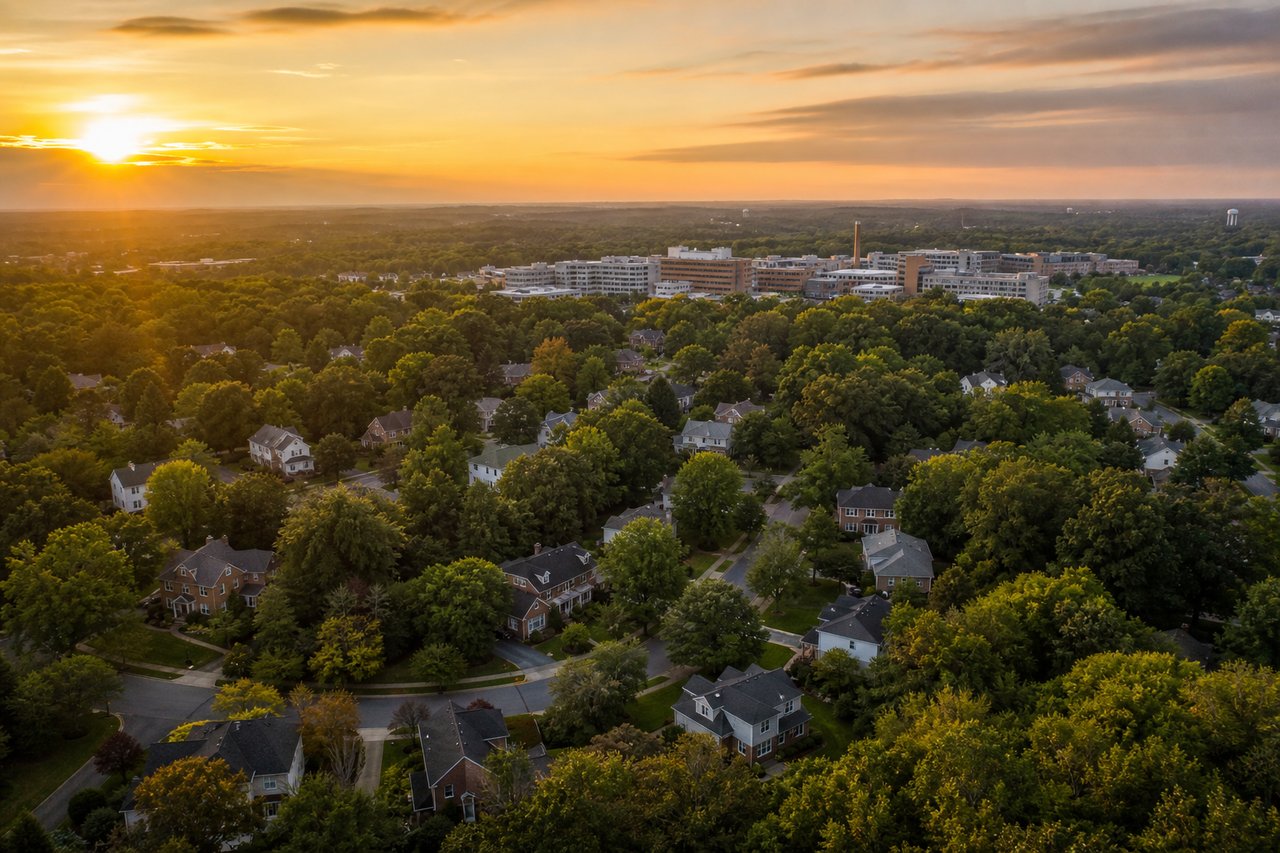
VCU Health Growth: Richmond Real Estate Impact
Written by Mike Boone, Owner and Broker of Boone Residential, a Richmond, VA brokerage. Licensed by the Virginia Real Estate Board.
What does VCU Health's expansion mean for buyers and sellers in Richmond and Chesterfield?
Quick Answer: VCU Health is investing more than $2 billion across Richmond and Chesterfield through the early 2030s — including a new 66-bed Chesterfield hospital, a $90 million Pauley Heart Center Pavilion, and a proposed $1.5 billion, 16-story inpatient tower on the MCV campus. For buyers and investors, that means a multi-year demand ramp concentrated in Chesterfield's Iron Bridge/Route 10 corridor and the MCV/Diamond District. For sellers in Chesterfield, Henrico, Hanover, and Richmond City, proximity to these facilities is a legitimate, verifiable marketing point for relocating healthcare buyers.
VCU Health is investing close to $400 million in Chesterfield County alone, with a proposed $1.5 billion inpatient tower and hundreds of millions in additional projects committed to downtown Richmond through 2032. That scale of institutional investment creates sustained job growth, shifts commuter patterns, and puts long-term upward pressure on housing demand across Richmond City, Chesterfield, Henrico, Hanover, and Powhatan, making it one of the most consequential real estate stories in the region right now.
What VCU Health Is Actually Building (and When)
Before we talk strategy, let's get the facts straight. This isn't one project. It's a coordinated, decade-long build-out with multiple facilities coming online at different times. Here's where things stand as of August 2026.
Chesterfield: VCU Health's biggest suburban move
Construction on the Chesterfield Pavilion, an ambulatory surgery center and medical office building at 7000 Commons Plaza near Route 10 and the Chesterfield Courthouse, broke ground in May 2025 and is scheduled to open in 2027, according to Richmond BizSense.
Adjacent to that, Chesterfield County announced in March 2026 that VCU Health will build its first-ever hospital in Chesterfield: a 66-bed, approximately 203,000-square-foot facility at Route 10 (Iron Bridge Road) and Nash Road, projected to be completed by May 2030. The hospital alone carries an estimated price tag of $306 million. Combined with the pavilion, Virginia Business reports the total VCU Health investment in Chesterfield approaches $400 million.
That's not a footnote in Chesterfield's development story. That's the headline.
Downtown Richmond: an even longer runway
In April 2025, VCU Health opened a new $38 million liver-care unit in its Main Hospital at 1250 E. Marshall Street. In January 2026, WTVR CBS 6 reported the opening of a new $28 million NICU adding 20 beds at Children's Hospital of Richmond.
In April 2026, VCU Health broke ground on a $90 million Pauley Heart Center Pavilion on Sherwood Avenue in Richmond's Diamond District, a 93,000-square-foot cardiovascular facility scheduled to open in 2028, per Virginia Business.
And further out — and considerably larger than any single project above: VCU Health has proposed a 16-story, $1.5 billion inpatient tower on the MCV campus at the corner of E. Leigh and N. 12th Street. Per a 2025 RFP reported by 12 On Your Side, the tower would eventually house 576 beds, built in two phases — the first an 8-story, 240-bed building with a dedicated surgical floor, more than a 72% increase over the campus's current bed capacity. According to Virginia Business, design is planned for 2026–2028, construction from 2027–2032, and occupancy beginning 2032–2033. The Commonwealth Times has covered why MCV workers say this capacity is urgently needed.
Each of these projects goes through the Virginia Department of Health's Certificate of Public Need (COPN) process, which provides public documentation of capital costs and scope — a useful reality check when evaluating how serious any given expansion actually is.
What This Means for the Richmond Housing Market
Institutional investment at this scale does a few concrete things to local real estate. I've watched this pattern play out with other major employers in this region, and VCU Health's expansion has the same hallmarks.
Job creation drives sustained housing demand
Hospitals don't just hire physicians. A facility like the new Chesterfield hospital brings nurses, surgical techs, imaging specialists, administrative staff, facilities teams, and a long tail of vendor and service businesses. That translates into real, ongoing housing demand from people who need to live within a reasonable commute of their shift.
Healthcare workers on rotating shifts tend to prioritize short commutes and low-maintenance housing. That means demand clusters within 20–30 minutes of each facility: in Chesterfield, that's the Iron Bridge/Route 10 corridor, courthouse-adjacent neighborhoods, and communities along Route 288. In Richmond City, it's the urban core, walkable neighborhoods near the MCV campus, and transit-accessible corridors toward Henrico. Even Hanover and Powhatan benefit as higher-income healthcare professionals weigh lifestyle against commute time.
The broader market data backs this up. According to Axios Richmond, citing Virginia Realtors data from July 2026, metro Richmond recorded 7,018 home sales from January through June 2026, about 580 more than the same period in 2025, with regional sales up roughly 10% versus 5.5% statewide. By locality, Chesterfield led with sales up 12.5%, followed by Richmond City at 11.3%, Hanover at 5.5%, and Henrico at 4.3%.
That's broad-based demand, and VCU Health's expansion is one of the structural reasons Chesterfield is outpacing the state average.
Anchor institutions create price resilience
Neighborhoods near major hospitals tend to hold value better during downturns because healthcare employment is relatively recession-resistant. The MCV campus area in downtown Richmond already benefits from this. Over time, the Iron Bridge/Nash Road corridor in Chesterfield will develop the same characteristic as the hospital and pavilion reach full staffing.
There's also a longer-term tax revenue argument. According to Virginia Bio, the city estimates that completed VCU Health-anchored development will generate $16.8 million in tax revenue for Richmond's general fund in the first 10 years and nearly $60 million from real estate taxes over 25 years. That kind of fiscal projection shapes infrastructure investment, which in turn supports property values.
One honest caveat: properties directly adjacent to high-traffic medical corridors or active construction zones can see short-term pricing pressure from noise, congestion, and disruption. That's a real consideration, not a dealbreaker, but it's worth factoring into your offer strategy or your listing timeline.
Here's a current snapshot of median sale prices and market pace across the areas most relevant to this story, based on trailing 90-day Zillow sales data as of August 2026:
Area | Median Sale Price | Median Days on Market |
|---|---|---|
Midlothian | $450,753 | 14 |
Chester | $393,995 | 49 |
Salisbury | $250,000 | 47 |
Moseley | $628,750 | 52 |
North Chesterfield | $338,670 | 17 |
Rosemont | $1,205,000 | 53 |
These are area-level medians from closed sales. An individual home's value varies by condition, street, and timing, and the right price for your specific situation requires a local market analysis, not a table.
Buyer and Seller Strategy in a VCU Health Growth Market
If you're buying near a VCU Health expansion zone
The fundamental question is: are you buying ahead of the demand curve, or are you paying for growth that's already priced in?
For Chesterfield, the Pavilion opens in 2027 and the hospital isn't projected to complete until 2030. That's a multi-year runway. Areas within a comfortable commute of Iron Bridge and Nash Road, including parts of Midlothian, North Chesterfield, and Chester, are worth evaluating now, before staffing ramps up and rental competition increases. I walk buyers through zoning maps, planned infrastructure, and multi-year development timelines when we're evaluating these trade-offs. It's not guesswork; it's due diligence.
For the Diamond District and downtown Richmond, the Pauley Heart Center Pavilion opens in 2028, and the proposed $1.5 billion inpatient tower is a decade-long project, with occupancy not expected until 2032–2033. That's a longer-horizon play. Short-term, expect construction disruption — the tower's footprint requires demolishing and relocating the visitor parking deck, health sciences library, and Strauss research building. Long-term, institutional investment of this scale reinforces the area's trajectory toward higher-value use. If you're buying a condo or urban property near the MCV campus, factor in both the upside and the near-term noise.
I'd also encourage buyers in Henrico, Hanover, and Powhatan not to overlook the commuting corridor angle. VCU Health's workforce catchment extends well beyond Richmond City limits. A home on the I-64 corridor in Henrico, or near Route 288 in western Chesterfield, can be legitimately marketed to healthcare workers even if the facility is in a different locality. That broadens your resale pool.
For more on how the broader Richmond market is performing right now, my post on whether home values are rising or falling in Richmond, VA gives useful context.
If you're selling in a VCU Health impact zone
Sellers in Chesterfield, Henrico, Hanover, and Richmond City can legitimately market proximity to expanding VCU Health facilities as a location advantage. That's especially true for buyers in healthcare, higher education, or related fields who are relocating for a position at one of these campuses.
What you can say: current commute times to VCU Health facilities, proximity to the Iron Bridge/Route 10 corridor, access to I-64 or Route 288. What you shouldn't say: guarantees about future appreciation or promises about what VCU Health will or won't build next — the inpatient tower, for instance, is still in the planning and approval phase. Stick to verifiable facts and let the institutional momentum speak for itself.
Midlothian sellers in particular are sitting in an interesting position. The area already moves quickly — 14 days on market at a $450,753 median — and VCU Health's Chesterfield build-out adds a durable demand story that goes beyond the typical "good location" pitch. If you're thinking about timing your sale, my Midlothian market update covers the pricing dynamics in detail.
If you're investing
The investor playbook around major medical expansions is pretty consistent: acquire rentals or small multifamily within 5–15 minutes of a facility before it opens, then capture rising rents and lower vacancy as staffing peaks. The timelines here are clear: Chesterfield Pavilion opens 2027, Pauley Heart Center in 2028, Chesterfield hospital projected for 2030, and the $1.5 billion inpatient tower reaching occupancy in 2032–2033. That's a staggered demand curve — worth over $2 billion in disclosed investment altogether — not a single spike.
The risk is overpaying in anticipation of demand that's still years out, especially in a rate environment that affects carrying costs. I cover the broader Richmond investing picture in my post on whether Richmond is a good market for real estate investing in 2026. The VCU Health angle adds a specific, time-anchored demand driver that's worth layering into that analysis.
Frequently Asked Questions
How much is VCU Health investing in the Richmond area overall?
Across current and proposed projects, VCU Health's disclosed investment in Richmond and Chesterfield totals more than $2 billion. That includes roughly $400 million in Chesterfield (a new hospital and the Chesterfield Pavilion), $90 million for the Pauley Heart Center Pavilion, $38 million for a liver-care unit, $28 million for a NICU expansion, and a proposed $1.5 billion, 16-story inpatient tower on the MCV campus. The projects span 2025 through the early 2030s, so the investment lands in phases rather than all at once.
How will VCU Health's new Chesterfield hospital and pavilion affect home values near Iron Bridge Road and Nash Road?
The combination of a $90 million pavilion (opening 2027) and a $306 million hospital (projected 2030) at Route 10 and Nash Road will create a significant long-term employment anchor in that corridor. Areas within a comfortable commute, including parts of Midlothian, North Chesterfield, and courthouse-adjacent neighborhoods, are likely to see sustained housing demand as hiring ramps up. Short-term, properties directly adjacent to construction zones may face some pricing pressure from traffic and noise, but the long-term trajectory for the broader submarket is positive.
Is it a good time to buy near VCU's MCV campus or the Diamond District given all the new construction?
It depends on your timeline and tolerance for short-term disruption. The Pauley Heart Center Pavilion on Sherwood Avenue opens in 2028, and the proposed $1.5 billion, 16-story inpatient tower on the MCV campus isn't projected to reach occupancy until 2032–2033. Buyers with a 5-plus-year horizon have time to get ahead of that demand curve; buyers who need a quiet, settled environment immediately may prefer to wait until construction phases wind down. A local agent can help you weigh the specific trade-offs for any address you're considering.
Will the new VCU hospital in Chesterfield increase demand for rentals and starter homes for healthcare workers in Midlothian and nearby neighborhoods?
Yes, that's a reasonable expectation. Large hospital openings typically generate demand for housing within 20–30 minutes of the facility, and healthcare workers on rotating shifts tend to prioritize short commutes. The Chesterfield Pavilion opens in 2027 and the hospital in 2030, so demand will build gradually. Investors and sellers in the Iron Bridge/Route 10 corridor, North Chesterfield, and Midlothian-area communities are positioned to benefit as staffing ramps up over the next several years.
As a seller in Henrico or Hanover, should I highlight proximity to VCU Health facilities when marketing my home?
If your home sits along a commuting corridor with reasonable drive times to VCU Health campuses — the I-64 corridor in Henrico, for example — then yes, that's a legitimate and useful selling point, especially for buyers relocating for healthcare roles. Stick to verifiable facts: current commute times, highway access, and proximity to the relevant campus. Avoid speculating about future appreciation or making promises about VCU Health's build-out timeline, since those plans — including the inpatient tower, which is still in the planning phase — can shift.
Does living close to major hospitals like VCU Health help or hurt resale value in Richmond and Chesterfield?
Generally, proximity to a major medical employment anchor supports long-term price resilience because healthcare employment tends to be stable even in economic downturns. The effect is most positive in a 5–15 minute commute radius that avoids the immediate noise and traffic of the facility itself. Properties directly on high-volume medical corridors can trade at a slight discount due to congestion, but neighborhoods one or two streets removed often benefit from the employment anchor without the drawbacks. Every address is different, and a comparative market analysis will show you exactly where a specific property sits in that spectrum.
How can investors position themselves around VCU Health's Chesterfield and Diamond District projects without overpaying?
The key is matching your acquisition to the actual timeline. The Chesterfield Pavilion opens in 2027, the Pauley Heart Center in 2028, and the Chesterfield hospital in 2030 — that's a multi-year demand ramp, not an immediate spike. Buying too far ahead means carrying costs before rents rise; buying after opening means competing with investors who moved earlier. The sweet spot is typically 12–24 months before a facility opens, with a focus on rentals or small multifamily within a realistic commute. Run those numbers carefully against current interest rates and local vacancy trends before committing.
VCU Health's expansion is one of the most durable demand drivers in the Richmond region right now, and understanding how it maps to specific neighborhoods is the difference between a well-timed move and one that's either too early or too late. If you're buying, selling, or investing in Chesterfield, Henrico, Hanover, or Richmond City, I'd welcome the chance to walk through your specific situation with you.
Schedule a call with Mike and let's talk through what this market means for your next move.
About Mike Boone
Mike Boone is the Owner and Broker of Boone Residential, a Richmond, VA real estate brokerage where he serves as a trusted advocate for buyers and sellers and has fueled the company's growth through authentic, client-first service.
Boone Residential · 804-409-8655
Equal Housing Opportunity. Boone Residential is licensed by the Virginia Real Estate Board. This article is general information only and is not legal, tax, or financial advice. All information is deemed reliable but not guaranteed and should be independently reviewed and verified. Readers should confirm their own numbers and circumstances with their attorney, tax advisor, lender, or closing officer.